
The Mistake: Finishing Everything Except the Door
Here's what almost every garage conversion looks like at the start. Someone frames the walls, runs electrical, lays down rubber flooring or epoxy, maybe adds a mini-split or a space heater. The garage door gets a glance, a shrug, and the thought: it still opens and closes, so it's fine. Nobody touches it.
It's a tempting shortcut because the door is the most expensive, most complicated part of the garage to deal with, and it's easy to convince yourself it doesn't matter once the room is "finished." The walls are insulated, the floor is warm underfoot, the lighting is good — so the space feels done. But the door is still the single largest opening in that room, and in most garages it's still an uninsulated or thinly insulated slab of steel or aluminum sitting in a track, moving on springs sized for a completely different job than the one it's now being asked to do.
Why the Door Doesn't Just Become a Wall
A finished wall holds its temperature. A garage door doesn't, even a decent one. In a North Salt Lake winter, with cold snowy stretches and the kind of day-to-night temperature swings this area gets, an un-upgraded garage door becomes the coldest surface in the room by a wide margin. That creates two separate problems:
- Heat loss. Whatever you're paying to heat that gym or workshop is leaking out through the door faster than through any insulated wall. The space never quite holds its temperature, and the heater runs more than it should.
- Condensation. Warm, humid air from workouts, a space heater, or just daily use hits a cold door panel and condenses. Over a season that shows up as rust on the bottom of the panel, mildew smell, or water pooling at the base of the door. This is a bigger deal with dry Utah air outside and artificially humid air inside than people expect.
There's also the practical issue of drafts. A door with worn or mismatched weatherstripping can let in a surprising amount of cold air along the bottom and sides — air that a finished room is not built to handle the way an open garage was.
The Spring and Opener Problem Nobody Thinks About
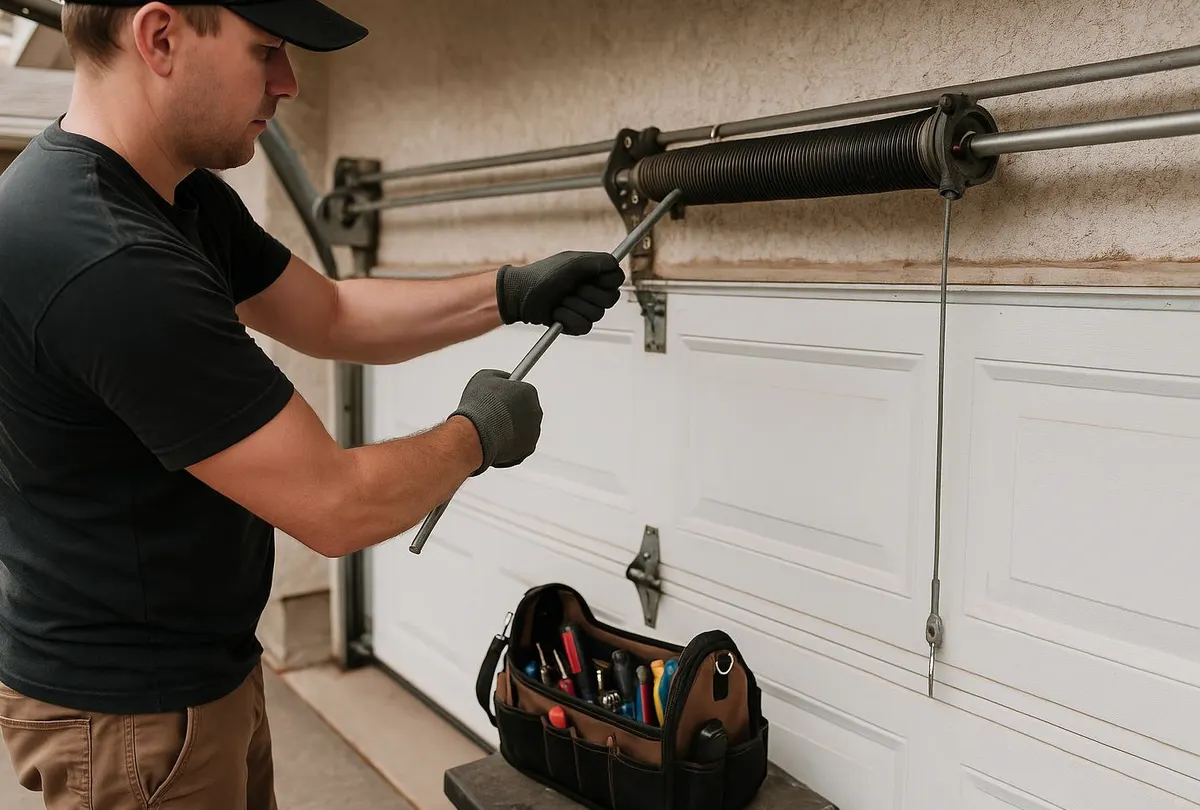
If part of the conversion involves actually upgrading the door — swapping in an insulated panel door instead of leaving the old uninsulated one — the door gets heavier. Insulated doors have foam core and a thicker steel skin, and that added weight changes the math the springs were built around.
Springs are sized to counterbalance a specific door weight. Put a heavier insulated door on old springs and the opener has to work harder to lift it, which shortens the life of the opener motor and puts uneven strain on the drive gear. The door may also reverse unexpectedly, close too fast, or feel heavy when lifted by hand. This isn't a maybe — it's a predictable mechanical outcome, and it's the kind of thing that gets missed when the door swap is treated as a cosmetic upgrade instead of a mechanical one.
The Real Argument: Keep It Functional or Seal It Off?
This is usually where the actual disagreement lives. One person wants to keep the door fully operational — still able to open, still looking like a garage from the street. The other wants to frame a wall in front of it, insulate properly, and never deal with the door again.
Keeping the door operational
- Preserves resale value — buyers in this area generally expect covered parking, especially with hail in summer and snow and ice in winter.
- Keeps the option open to convert the space back to a garage later.
- Costs more upfront if you want it properly insulated and sealed, since you're doing it around a working mechanical assembly.
Sealing the door permanently
- Gives a tighter, more consistent insulation job — no gaps, no moving parts to maintain.
- Removes flexibility; if you ever want to sell the house or go back to parking a car in there, it's a bigger job to undo.
- Given how useful covered parking is here through hail season and snow season, this is worth thinking through carefully before it's permanent.
Neither answer is wrong — but it's a decision, not a default. The mistake isn't picking one option; it's never actually deciding and leaving the door exactly as it was while finishing everything around it.
A Short Checklist Before You Call the Conversion Done
- Decide whether the door needs to stay fully operational or can be sealed/built over.
- If it's staying, upgrade to an insulated door if the current one isn't, and have the springs checked — heavier doors need properly matched springs.
- Replace worn weatherstripping on the bottom, sides, and top of the door to cut drafts.
- Add a vapor barrier or address moisture control if the room will be heated and humid.
- Have the opener's force and limit settings rechecked after any change in door weight.
When to Call North Salt Lake Garage Door
If you're mid-conversion and realized the door hasn't been part of the plan, that's a good time to call. We can walk through whether your current door is worth insulating and sealing or whether a Garage Door Installation with a proper insulated panel makes more sense for the space you're building. If you're upgrading to a heavier door, we'll also handle Spring Replacement so the springs and opener are matched to the new weight instead of straining against it — which matters a lot more once that door is motor-operated every day instead of occasionally.
If you're in North Salt Lake, Bountiful, Woods Cross, Centerville, Farmington, West Bountiful, Kaysville, or Salt Lake City and you're turning a garage into a gym, office, or workshop, give North Salt Lake Garage Door a call before you close up the walls. We'll help you figure out what the door actually needs — and settle the argument either way.